
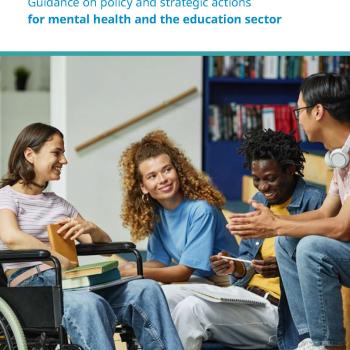






Young Lives welcomes the publication of the new WHO Guidance on policy and strategic actions to protect and promote mental health and well-being across government sectors, a useful and timely framework for integrating mental health across public policy. Following contributions from, among others, Young Lives' Kath Ford, we are particularly pleased to see the strong emphasis on the profound effects that multiple global crises and shocks, including climate change, conflict and epidemics/pandemics, are having on mental health and well-being worldwide.
The focus of the guidance on the impacts of factors such as food insecurity, poverty, lack of education and environmental degradation/shocks on mental health and well-being resonates closely with recent Young Lives findings. We are therefore particularly pleased to see research based on Young Lives evidence on the mental health cost of job loss among young adults cited in the guidance.
Young Lives also welcomes the recognition that childhood, adolescence and early adulthood are crucial periods for developing social and emotional connections, establishing relationships with peers and family and laying the groundwork for future opportunities. A critical point, as half of all mental health conditions are thought to develop during adolescence and up to three-quarters by early adulthood. Young Lives longitudinal evidence shows how important it is for policy-makers to target adolescents and young adults to help build resilience and reverse rising levels of mental health issues in young people, especially those facing conflicts and crises. We are delighted that the guidelines embody this holistic, life-course perspective to addressing mental health.
This will be an incredibly helpful resource for our policy work in Young Lives study countries and we will showcase these guidelines in our ongoing engagement with government partners.
Young Lives welcomes the publication of the new WHO Guidance on policy and strategic actions to protect and promote mental health and well-being across government sectors, a useful and timely framework for integrating mental health across public policy. Following contributions from, among others, Young Lives' Kath Ford, we are particularly pleased to see the strong emphasis on the profound effects that multiple global crises and shocks, including climate change, conflict and epidemics/pandemics, are having on mental health and well-being worldwide.
The focus of the guidance on the impacts of factors such as food insecurity, poverty, lack of education and environmental degradation/shocks on mental health and well-being resonates closely with recent Young Lives findings. We are therefore particularly pleased to see research based on Young Lives evidence on the mental health cost of job loss among young adults cited in the guidance.
Young Lives also welcomes the recognition that childhood, adolescence and early adulthood are crucial periods for developing social and emotional connections, establishing relationships with peers and family and laying the groundwork for future opportunities. A critical point, as half of all mental health conditions are thought to develop during adolescence and up to three-quarters by early adulthood. Young Lives longitudinal evidence shows how important it is for policy-makers to target adolescents and young adults to help build resilience and reverse rising levels of mental health issues in young people, especially those facing conflicts and crises. We are delighted that the guidelines embody this holistic, life-course perspective to addressing mental health.
This will be an incredibly helpful resource for our policy work in Young Lives study countries and we will showcase these guidelines in our ongoing engagement with government partners.