

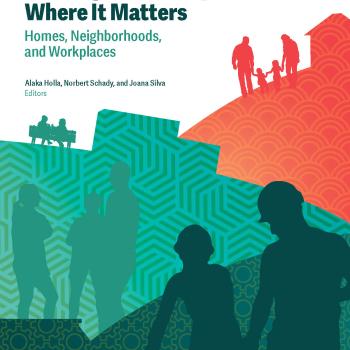





A new World Bank report has drawn on Young Lives data to underline the critical role that homes, neighbourhoods and workplaces play in shaping human capital and improving life outcomes.
The report, Building Human Capital Where It Matters: Homes, Neighborhoods, and Workplaces, argues that focusing on how human capital outcomes are shaped across these three environments will help governments and stakeholders design more effective interventions, leading to more well-paying jobs, lower poverty rates and higher levels of economic growth.
The World Bank report echoes Young Lives' longstanding message that investing in children early is essential. Young Lives research has consistently shown that poverty, poor nutrition and little or no access to quality education during the formative years can have a detrimental effect on a child's future skills, learning outcomes and life chances. Gaps in cognitive development, literacy and numeracy often emerge in early childhood and can persist throughout life. Without timely, evidence-based interventions, these inequalities can deepen over time.
A new World Bank report has drawn on Young Lives data to underline the critical role that homes, neighbourhoods and workplaces play in shaping human capital and improving life outcomes.
The report, Building Human Capital Where It Matters: Homes, Neighborhoods, and Workplaces, argues that focusing on how human capital outcomes are shaped across these three environments will help governments and stakeholders design more effective interventions, leading to more well-paying jobs, lower poverty rates and higher levels of economic growth.
The World Bank report echoes Young Lives' longstanding message that investing in children early is essential. Young Lives research has consistently shown that poverty, poor nutrition and little or no access to quality education during the formative years can have a detrimental effect on a child's future skills, learning outcomes and life chances. Gaps in cognitive development, literacy and numeracy often emerge in early childhood and can persist throughout life. Without timely, evidence-based interventions, these inequalities can deepen over time.