

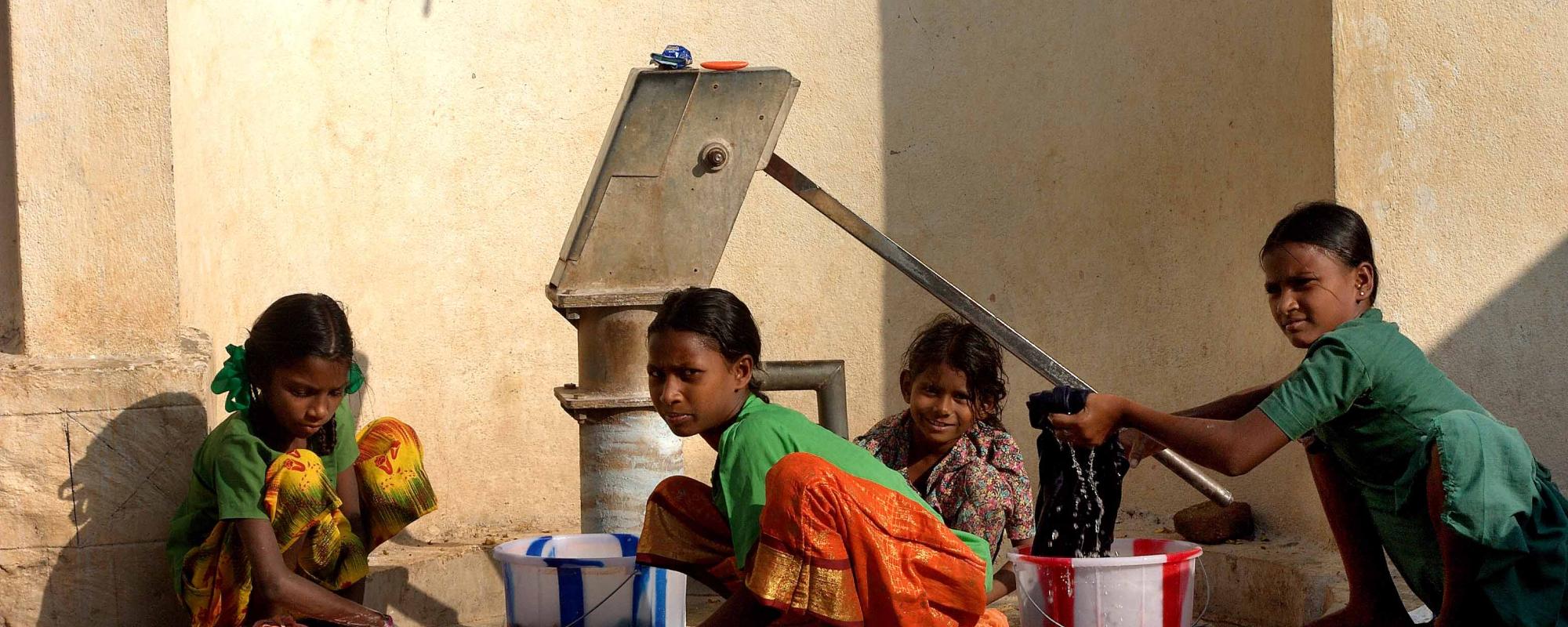



Influencing Global Climate Adaptation and Gender Policy: From Baku to Bonn, Belém, Bangkok and Beyond
Young Lives’ unique longitudinal evidence on the long-term and intergenerational impacts of early exposure to climate shocks on children and young people’s development—and how they can be mitigated—is driving ongoing collaborative work with UNICEF and Save the Children to ensure that the needs and vulnerabilities of children and youth are central in global climate adaptation policy.
In the months ahead of COP30 in Brazil, in 2025 they produced a series of joint policy briefs recommending indicators to measure progress towards the Global Goal on Adaption (GGA) in areas such as child health, nutrition, education and social protection. These recommendations were shared with government negotiators throughout the COP30 process and were reflected in several countries’ policy positions, helping to secure references to children, youth, and age-disaggregated data in the final COP30 adaptation agreement.
After COP30, the partnership continued with Young Lives, UNICEF and Save the Children responding to a COP30 Call for Submissions with a set of practical proposals to translate the newly adopted indicators into climate action that addresses the needs of children and young people.
Young Lives also regularly disseminates policy-relevant evidence on how social protection can help to remediate and protect against the negative effects of climate shocks and reduce their unequal impacts on adolescent girls and young women that can leave them disadvantaged in education and job opportunities. This included contributing longitudinal data to inform the development of the new Gender Action Plan adopted at COP30.
Read the full Impact Case Study and discover the many ways in which Young Lives is informing gender-responsive climate and social protection policy.
Influencing Global Climate Adaptation and Gender Policy: From Baku to Bonn, Belém, Bangkok and Beyond
Young Lives’ unique longitudinal evidence on the long-term and intergenerational impacts of early exposure to climate shocks on children and young people’s development—and how they can be mitigated—is driving ongoing collaborative work with UNICEF and Save the Children to ensure that the needs and vulnerabilities of children and youth are central in global climate adaptation policy.
In the months ahead of COP30 in Brazil, in 2025 they produced a series of joint policy briefs recommending indicators to measure progress towards the Global Goal on Adaption (GGA) in areas such as child health, nutrition, education and social protection. These recommendations were shared with government negotiators throughout the COP30 process and were reflected in several countries’ policy positions, helping to secure references to children, youth, and age-disaggregated data in the final COP30 adaptation agreement.
After COP30, the partnership continued with Young Lives, UNICEF and Save the Children responding to a COP30 Call for Submissions with a set of practical proposals to translate the newly adopted indicators into climate action that addresses the needs of children and young people.
Young Lives also regularly disseminates policy-relevant evidence on how social protection can help to remediate and protect against the negative effects of climate shocks and reduce their unequal impacts on adolescent girls and young women that can leave them disadvantaged in education and job opportunities. This included contributing longitudinal data to inform the development of the new Gender Action Plan adopted at COP30.
Read the full Impact Case Study and discover the many ways in which Young Lives is informing gender-responsive climate and social protection policy.